
PCR Plates
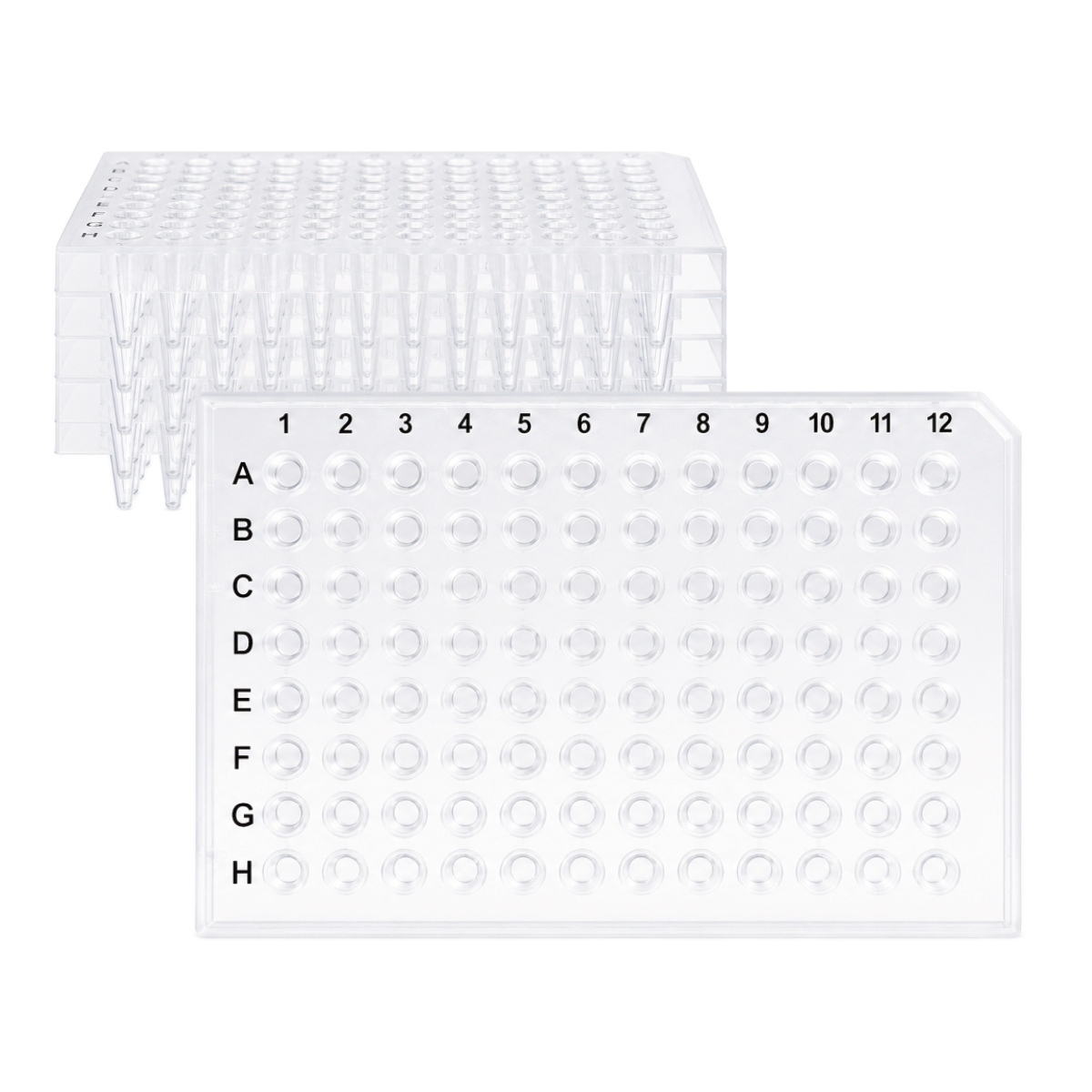
PCR plates are designed for thermal cycling, qPCR, and high-throughput molecular biology workflows, providing consistent well geometry and reliable heat transfer for accurate amplification results. Commonly available in 96 well PCR plate formats, these plates are compatible with standard thermocyclers and real-time PCR systems. Manufactured from high-quality polypropylene, PCR plates offer low binding, chemical resistance, and durability under repeated thermal cycling. Whether used for routine PCR, qPCR, or sample preparation, reliable PCR plates are essential for maintaining consistency and reproducibility in laboratory workflows.
-

-

-

-

-
 96-Well PCR plate 0.2mL Semi Skirt with Break Points and Clear Lettering
SKU: 100C0-2B
$34.99 - $329.99 -

-
Selecting PCR Plates for Your Workflow
Selecting the right PCR plate is critical for ensuring uniform heat transfer, minimizing sample loss, and achieving consistent amplification results across wells.
Plate format:
96 well PCR plates are the most commonly used format, supporting standard workflows and compatibility with most thermocyclers and automation systems.
Material:
Polypropylene PCR plates provide optimal thermal conductivity, chemical resistance, and low sample binding, making them ideal for PCR and qPCR applications.
Well design:
Uniform well geometry ensures consistent heat transfer and reliable amplification across all wells.
Skirt type:
Available in full-skirted, semi-skirted, and non-skirted designs. Full-skirted plates provide maximum stability for automation and labeling, while semi-skirted and non-skirted plates offer flexibility for different instruments.
Compatibility:
Ensure PCR plates are compatible with your thermocycler, qPCR system, and sealing method (films or mats).
Working volume:
Typical working volumes range from 100–200 µL per well, depending on plate design.
Sterility and certification:
Certified DNase-, RNase-, and pyrogen-free plates are recommended for sensitive molecular biology applications.
For most PCR and qPCR workflows, 96 well polypropylene PCR plates with consistent well geometry and proper sealing compatibility will provide reliable and reproducible results.
If you need help selecting the right PCR plate format or configuration for your laboratory, contact our team — we’re happy to help you find the best fit for your workflow.