
Centrifuge Tubes: A Complete Buyer’s Guide for Labs
Posted by Senior QA Manager, Emiy Froggert on Feb 9th 2026
Centrifuge tubes are one of the most widely used consumables in laboratories across research, clinical, and industrial settings. Despite their simplicity, choosing the right centrifuge tube can significantly impact sample integrity, workflow efficiency, and overall lab costs.
This guide breaks down everything you need to know before purchasing centrifuge tubes—so you can make the right decision for your lab.
1. Tube Size: More Than Just Volume
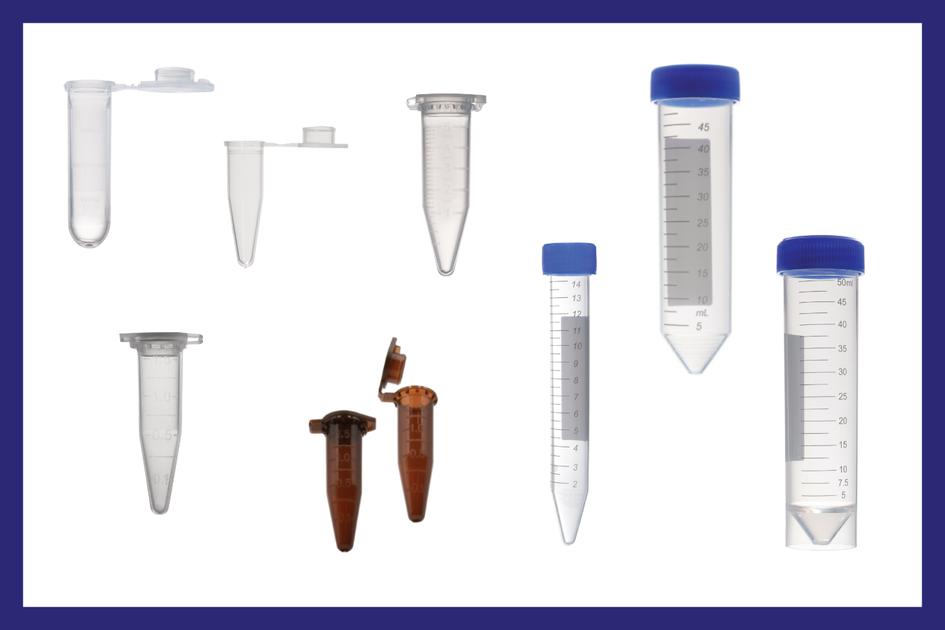
Centrifuge tubes come in a range of sizes, each designed for specific applications:
- 0.5 mL – 2 mL (microcentrifuge tubes):
- Ideal for molecular biology and small-volume samples
- Common in PCR and microanalysis workflows
- 15 mL tubes:
- Standard for sample preparation and medium-volume processing
- 50 mL tubes:
- Used for larger sample volumes, storage, and transport
? Tip: Don’t oversize your tubes—using larger tubes than necessary can waste reagents and reduce efficiency.
2. Conical vs. Self-Standing Tubes
The base design affects both usability and workflow:
- Conical bottom:
- Better for pellet collection during centrifugation
- Requires a rack to stand upright
- Self-standing (flat bottom):
- More convenient for benchtop work
- Eliminates the need for additional racks
Many labs keep both types on hand depending on the task.
3. Sterile vs. Non-Sterile Options
Sterility is critical—but not always necessary.
Choose sterile centrifuge tubes if:
- You’re working with cell cultures or biological samples
- You need RNase/DNase-free conditions
- You operate in regulated environments
Choose non-sterile tubes if:
- You sterilize in-house
- You’re handling non-sensitive materials
- You’re optimizing for cost in high-volume workflows
4. Material & Performance
Most centrifuge tubes are made from polypropylene (PP)—and for good reason:
- High chemical resistance
- Autoclavable
- Durable under high centrifugal force
However, not all polypropylene tubes are created equal.
Look for:
- Clarity for easy sample visibility
- Uniform wall thickness for consistent performance
- Graduated markings for accuracy
5. Maximum Centrifugation Speed (RCF)
Not all tubes can handle the same speeds.
Always check:
- Maximum RCF (Relative Centrifugal Force) rating
- Compatibility with your centrifuge rotor
Using tubes beyond their rated limits can lead to:
- Tube deformation
- Leakage
- Sample loss
6. Cap Design & Leak Prevention
Cap quality plays a major role in sample safety.
Common features to consider:
- Leak-proof sealing
- Flat vs. domed caps
- Easy-open designs for repetitive use
Poor sealing can result in contamination, evaporation, or hazardous spills.
7. Packaging Options & Cost Efficiency
How your tubes are packaged affects both price and workflow:
- Bulk packaging:
- Most cost-effective
- Best for high-throughput labs
- Rack-packed tubes:
- Organized and ready to use
- Saves time but costs more
- Individually wrapped:
- Ideal for sterile environments
- Higher cost but maximum protection
8. Compatibility & Fit
Even standard sizes can vary slightly between manufacturers.
Before committing to bulk orders:
- Test compatibility with your centrifuge
- Ensure proper fit in rotors and adapters
- Verify rack compatibility
A poor fit can disrupt workflows and damage equipment.
9. Supply Chain Reliability Matters
Consistency is key in any lab environment.
Work with suppliers who:
- Maintain consistent quality across batches
- Offer reliable inventory levels
- Provide fast and predictable shipping
Switching between inconsistent suppliers can introduce variability into your results.
Final Thoughts
Centrifuge tubes may seem like a simple purchase—but the right choice can improve accuracy, reduce risk, and streamline your operations.
By considering factors like size, sterility, material, and compatibility, your lab can avoid costly mistakes and maintain consistent performance.
At Kashi Scientific, we offer a full range of centrifuge tubes—from microcentrifuge to 50 mL formats—available in sterile and non-sterile options, designed for reliability and scalability.
Looking for the Right Centrifuge Tubes?
We can help you:
- Choose the right specifications for your workflow
- Provide samples for compatibility testing
- Offer competitive pricing for bulk orders
Contact us today to get started.